
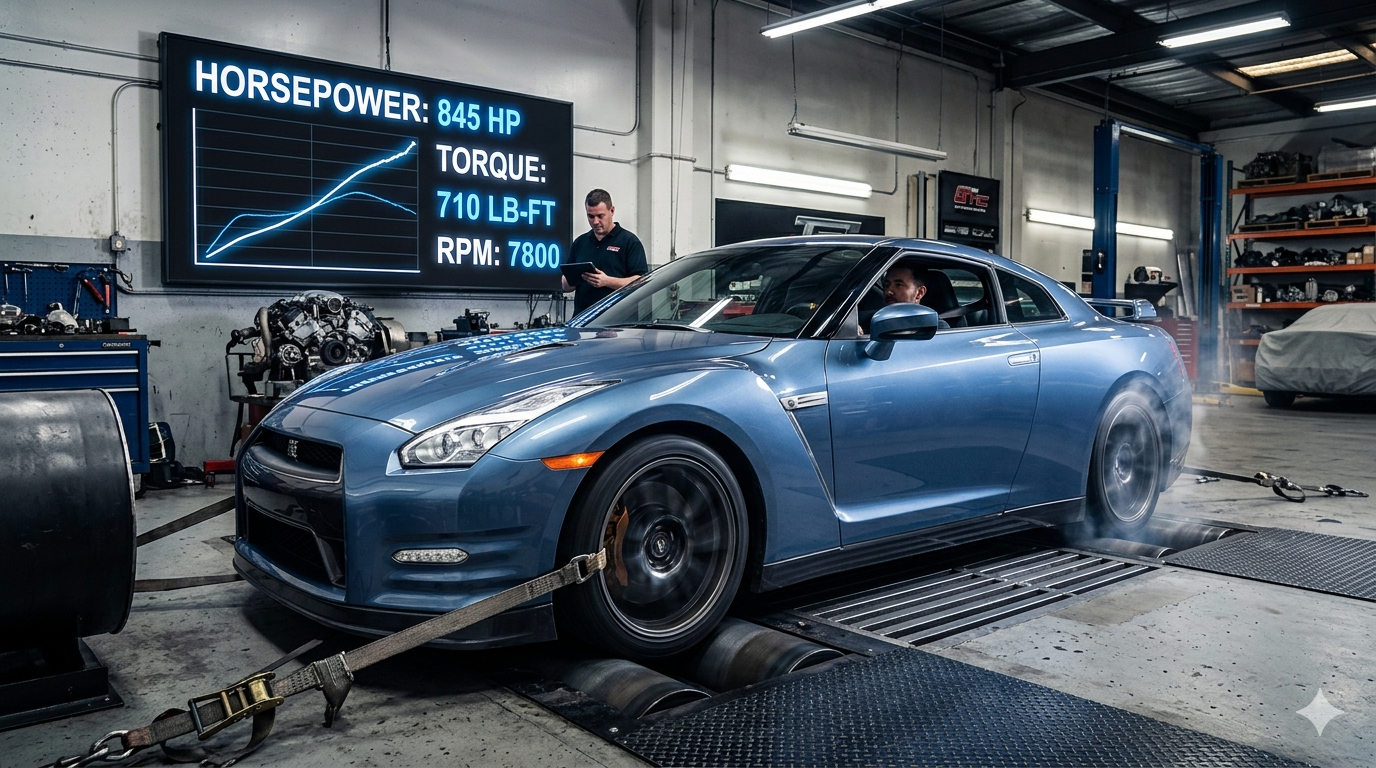
The term horsepower is perhaps the most ubiquitous and yet misunderstood metric in the automotive world. It is the gold standard for comparing a high-strung Italian supercar to a humble economy hatchback. But what is it, exactly? Is it literally the power of a horse? Why does it matter more at 100 mph than it does at 10 mph?
This article explores the deep history, complex physics, and future evolution of the unit that moves the world.
I. The Origin Story: James Watt and the Marketing of Power
The concept of horsepower was born not from a desire for speed, but from a need for sales. In the late 18th century, Scottish engineer James Watt had perfected a new, more efficient steam engine. To sell it to mine owners and brewers, he needed a way to explain how much work his machine could do in a language they understood: horses.
Watt observed draft horses at a mill. He estimated that a horse could turn a mill wheel with a diameter of 24 feet about 2.4 times per minute. Based on the force the horse exerted (about 180 pounds), Watt calculated that a horse could move 33,000 pounds one foot in one minute.
$$1 \text{ hp} = 33,000 \text{ ft-lb/min}$$
Whether a single horse can actually sustain this for a full workday is debatable (most modern experts suggest it’s an overestimation), but as a marketing tool, it was brilliant. It allowed a factory owner to say, “This engine replaces ten horses,” making the investment case crystal clear.
II. The Physics: Power vs. Torque
To understand horsepower, you must first understand Torque.
- Torque is a measure of rotational force. It is the “grunt” that gets a car moving from a standstill.
- Horsepower is the rate at which that work is done. It is a function of torque and engine speed (RPM).
The mathematical relationship is defined by a specific formula:
Horsepower=5252Torque×RPM
Why 5252? This constant is derived from the conversion of rotational units (RPM and Radians) into the foot-pounds per minute that James Watt originally defined. Interestingly, because of this formula, a car’s horsepower and torque curves will always cross at exactly 5,252 RPM.
Analogy: If you are trying to loosen a stubborn bolt with a wrench, the strength you use to pull the handle is Torque. How many times you can spin that wrench in a minute is Horsepower.
III. The “Different” Horsepowers: BHP, WHP, and PS
Not all “HP” is created equal. Depending on where you are in the world or how the car is being measured, the numbers can vary significantly.
1. Brake Horsepower (BHP)
BHP is the measure of an engine’s power without any power losses caused by the gearbox, alternator, differential, or water pump. It is measured directly at the engine’s crankshaft (the “brake” refers to the device used to load the engine during testing).
2. Wheel Horsepower (WHP)
This is the “real world” number. WHP is measured at the driving wheels using a chassis dynamometer. Because power must travel through the transmission and axles, there is significant “drivetrain loss” (usually 15% to 25%). If a car is advertised at 300 hp (BHP), it might only put down 240 hp to the ground (WHP).
3. Metric Horsepower (PS)
Common in Europe, PS (Pferdestärke) is the metric equivalent of horsepower. It is slightly different from the Imperial HP:
- 1 hp (Imperial) ≈ 1.014 PS
- 1 PS ≈ 0.986 hp
IV. How We Measure It: The Dynamometer
A Dynamometer (or “Dyno”) is essentially a treadmill for cars. There are two main types:
- Engine Dyno: The engine is removed from the car and bolted to a stand. This provides the purest measurement of the engine’s potential.
- Chassis Dyno: The car is driven onto a set of heavy rollers. As the driver accelerates, the rollers measure the force exerted by the tires. This is how tuners and enthusiasts verify performance upgrades.
V. Horsepower in the Electric Era
Electric Vehicles (EVs) are fundamentally changing our relationship with horsepower. In a traditional gas engine, horsepower builds as the engine “revs up.” In an electric motor, maximum torque is available at 0 RPM.
This is why a 500 hp Tesla feels significantly faster than a 500 hp gas-powered sports car in a 0–60 mph sprint. The EV doesn’t need to wait for a turbocharger to “spool” or for the engine to reach a specific power band; it provides 100% of its potential the millisecond you touch the pedal.
VI. Why High Horsepower Matters (And Why It Doesn’t)
In the modern “Horsepower Wars,” manufacturers are pushing figures higher than ever. It is now possible to buy a family sedan with 700 hp (like the Dodge Charger Hellcat) or a hypercar with nearly 2,000 hp (the Rimac Nevera).
Does more HP always mean a better car?
- The Pros: Better highway passing ability, higher top speeds, and a more “effortless” driving feel.
- The Cons: Higher fuel/energy consumption, increased insurance costs, and more stress on tires and brakes.
For the average driver, weight is often more important than horsepower. A lightweight 200 hp car (like a Mazda Miata) can be more fun and agile than a heavy 400 hp SUV.
Conclusion
Horsepower is more than just a number on a spec sheet; it is a legacy of the Industrial Revolution that continues to define our engineering achievements. From James Watt’s draft horses to the multi-motor electric drivetrains of tomorrow, the pursuit of power remains the primary heartbeat of the automotive industry. Whether you’re hauling a trailer or carving through a mountain pass, it is horsepower that bridges the gap between a stationary machine and the freedom of motion.

No responses yet